I wrote a post back in February asking whether the EOS-7D Mk III and EOS-90D may be morphed into a single camera. The rumor mill has been buzzing in the last few days about how Canon is 'discontinuing' the EOS-7D line of cameras. "The EOS-7D Mark II will be the last of its kind !" Don't pay much attention to these headline grabbing proclamations.
There is little doubt Canon is at the crossroad of a major decision. How to simplify their mirrorless and DSLR camera lineup without losing valuable DSLR customers rapidly. The EOS-7D and EOS-5D lines may 'disappear' in the not too distant future but will be replaced by other bodies with similar capabilities.
My advice is not to get hung up on the model number or name but buy the features and functions you need and want. Canon will announce a replacement to the EOS-1D X Mark II some time in early 2020, along with a pro version of the EOS R mirrorless camera. A new APS-C camera will probably come out some time in the second half of 2019. It may be called the EOS-7D Mk III, EOS-90D or something else. I hope it will have the following features :
Low to Mid 20MP sensor
Dual DIGIC 8 processors
10 fps (12 fps possible but unlikely)
4K+ video @ 30fps and 1080p @ 60fps
Pop up flash and WiFi. GPS and WiFi more likely
2 memory slots, one SD and one CFast (Unlikely. Dual SD more likely)
AF points to below 100 with more cross-type points
Increase in high ISO and Dynamic Range performance
I am back from my East Africa Wildlife Photo Tour. It was a great trip with many sightings and photo opportunities. Time to process my photos and return to writing this blog. While I was away, there were a few interesting pieces of photography news that caught my eye.
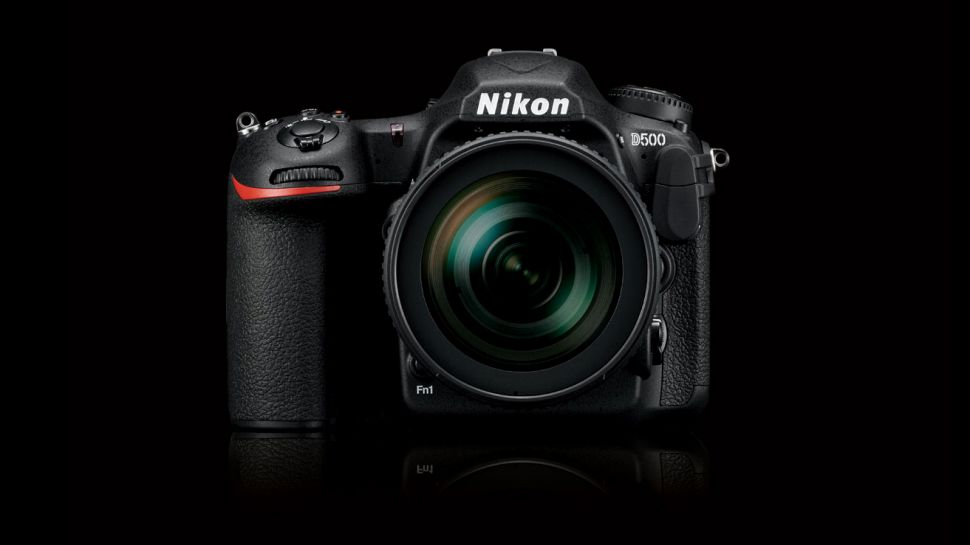
It seems Canon may be hesitating on annoucing the EOS-7D Mark III in 2018. I still think there is a slightly less than even chance they may release the camera this year, since the Nikon D500 is challenging the EOS-7D Mark II in a very serious way. If Canon decides not to release the Mark III in 2018, they will have to release a major firmware upgrade to the current model, like they did with the EOS-7D back in 2012.
The EOS-90D will appear before the EOS-7D Mark III if the decision is made to delay its introduction. Also expect Canon to announce more Rebel series cameras before the CP+ Show on March 1 in Yokohama, Japan.
Things are moving rapidly right now in Canon's labs and board room. They are planning to make big announcements in the next couple of years, from the full frame EF mount mirrorless camera to the Super Telephoto lens upgrade and more high end Diffractive Optics glass. All this is to culminate and capture the world's photographers attention leading up to the 2020 Summer Olympics in Tokyo. Check back often to find out the latest development.
My readers know me as The Wildlife Ho-tographer. I have been using Canon equipment for almost three decades. Through the years, I have owned and used almost all of Canon professional and consumer grade gear and have tested many of them on global wildlife photo tours.
As you know, I have picked the EOS-7D as the best APS-C camera on the market for action and wildlife photography fours years in a row after it was announced in 2009. The Mark II model came out in 2014 followed by the Nikon D500 in January, 2016.
Although the Mark II camera is a dramatic improvement over the earlier model, the Nikon D500 gave the Canon camera a real challenge and of course, the EOS-7D Mark III is just 'around the corner'. The test cameras are already out of the labs and into the wild for beta testing.
There are crazy rumors flying around saying the new camera will have a 30MP sensor and burst rate of 12+ fps, etc. Frankly, that is a lot of photography noise so early in the guessing game. The trend in the past few years has been to speed up the replacement cycle of higher end cameras.
Since the EOS-7D has always been the leader in Canon's APS-C camera lineup, it is very logical the Mark III will again come with a new generation of APS-C sensor. Many photographers are clamoring for everything under the sun and a list price of $1,499. One has to be more realistic about the business of manufacturing photography equipment.
Canon is a conservative and deliberative company. They rarely try to be the first in new features but there are some tried and true features like illuminated buttons that have appeared on other manufacturers' cameras for years. A recent patent from Canon shows they have finally made that 'leap'. My personal opinion is the Mark II is already a very good camera but a few improvements will make it an even better prosumer DSLR body. I expect the Mark III model to arrive some time by the middle of 2018.
Here is my wish list for the EOS-7D Mark III :
A slight increase in megapixels, low to mid 20s for the sensor.
10 fps is adequate but if technologically feasible, 12 fps is welcome
4K video is unnecessary for my needs but its de rigueur these days for any camera
GPS and WiFi are also unnecessary for my needs but probably will be included
Additional AF points to below 100 is critical with more cross-type points
Increase in high ISO and Dynamic Range performance is critical
Addition of illuminated buttons on the back panel is welcome
My readers know me as The Wildlife Ho-tographer. I have been using Canon equipment for almost three decades. Through the years, I have owned and used almost all of Canon professional and consumer grade gear and have tested many of them on global wildlife photo tours.
As you know, I have picked the EOS-7D as the best APS-C camera on the market for action and wildlife photography fours years in a row after it was announced in 2009. The Mark II model came out in 2014 followed by the Nikon D500 in January, 2016.
I will be going on another wildlife photography tour very soon. In September, I was in the high Arctic and this time I will be photographing Tigers and Asiatic Lions, plus other fauna in India. There are only about 500 of these magnificent animals left in the wild.
Although the Mark II camera is a dramatic improvement over the earlier model, the Nikon D500 gave the Canon camera a real challenge and of course, the EOS-7D Mark III is just 'around the corner'. The test cameras are already out of the labs and into the wild for beta testing.
There are crazy rumors flying around saying the new camera will have a 30MP sensor and burst rate of 12+ fps, etc. Frankly, that is a lot of photography noise so early in the guessing game. I do not expect the Mark III to be announced earlier than late Q1, 2018 but the trend in the past few years has been to speed up the replacement cycle of higher end cameras.
Since the EOS-7D has always been the leader in Canon's APS-C camera lineup, it is very logical the Mark III will again come with a new generation of APS-C sensor. Many photographers are clamoring for everything under the sun and a list price of $1,499. One has to be more realistic about the business of manufacturing photography equipment.
My personal opinion is the Mark II is already a very good camera but a few improvements will make it an even better prosumer DSLR body. There is talk about an announcement some time in March 2018. Since the EOS-7D Mark III will have 4K video and possibly C-Log, a release date just before the big NAB Show in April in Las Vegas makes a lot of sense. Keep checking back as I receive the latest information.
Here are some possible specs for the EOS-7D Mark III :
A slight increase in megapixels, low to mid 20s for the sensor.
10 fps is adequate but if technologically feasible, 12 fps is welcomed.
4K video and C-Log is unnecessary for me but it's de rigueur for any prosumer camera
Since 4K video will be included, a tilting or variable LCD screen is expected
Additional AF points to below 100
Increase in high ISO and Dynamic Range performance is critical
Canon announced the EOS-7D Mark II camera in 2014. My readers will remember when the original EOS-7D was released in late 2009, I picked it as the best APS-C camera for sports and wildlife photography 4 years in a row.
The current Mark II version is an excellent camera but it has stiff competition from the Nikon D500. This camera has accompanied me on many global wildlife photo shoots and has not disappointed me so far. You can read my comprehensive review here. I expect Canon to release a major firmware upgrade to 'jazz up' the camera's performance until the Mark III version arrives in the second half of 2018.
While it is too early to know anything definitive about the Mark III model, I suspect the following additional specs may be part of the new camera :
New mid 20MP sensor
Much improved ISO performance
4K video
GPS, Bluetooth and NFC
Dual DIGIC 7 processor
3.2 inch LCD screen with 1.6M dots
Keep checking back. More to come as I receive additional information.
Today's DSLR cameras come with what the factory calls Rated Actuations on the shutter mechanism. That is the approximate numbers of times the shutter is expect to shoot a frame before needing replacement.
For example, the Canon EOS-80D, EOS-5Ds, EOS-7D Mark II and EOS-1D X Mark II cameras are rated as 100K, 150K, 200K and 400K, respectively. The actuation counts are easy for still photos but when videos are added in, it becomes a little bit trickier to get an accurate measurement.
Personally, I find this Shutter Count fascination to be nothing more than an academic curiosity. For professional grade cameras like the EOS-1D Mark IV or EOS-1D X Mark II cameras, their shutters are rated conservatively at 300,000 and 400,000 actuation, respectively.
Many photographers, including myself, have multiple bodies anyway and the chance of any one of the pro bodies racking up 300 to 400K actuations is small because one would have upgraded to a newer model anyway. However, I know a friend who owns the EOS-1D Mark IV and is still using the original shutter after raking up half a million actuations. Besides, getting a new shutter is not that expensive anyway.
When one has been out in the field long enough using pro equipment, one will discover having the dreaded Err 20 appearing on the LCD screen due to a shutter failure is slim to none, if one's gear is properly cared for with recommended factory maintenance. More often than not, there are other problems, like a circuit board failure, etc. It happened to me twice with the EOS-1D Mark IV and EOS-1D X while on wildlife photography shoots overseas.
If you are interested in finding out what your camera's actuation count is, read my earlier post on this subject and download the software to track your usage.
My readers know I have picked the Canon EOS-7D as the best value APS-C camera for sports and wildlife photography four years in a row. The Mark II version of this camera is also my pick as the new successor although it has keen competition from the Nikon D500. I have taken this camera on worldwide wildlife photo shoots and it passed with flying colors. You can read my comprehensive review and follow my travels on Facebook and Twitter. See my equipment bag and works on MichaelDanielHo.com
Although the Nikon D500 is newer, the extensive line of EF and EF-S lenses the EOS-7D Mark II can utilize is still coming out on top, in my opinion. I expect Canon to come out with a major firmware upgrade some time in late 2017 or early 2018 to keep the camera competitive. In the meantime, Canon has released a new firmware for the Mark II to take care of a few minor bugs.
Firmware Version 1.1.1 incorporates the following improvement and fix :
Enhances reliability of communications when transferring images using Wireless File Transmitter WFT-E7 (A/B/C/D/E).
Corrects the phenomenon of Err70 which occurs with certain combinations of settings.
Corrects the phenomenon in which in very rare cases the shutter can no longer be released.
Enhances reliability of operations for specific custom function settings.
Please note :
If using a Wi-Fi adapter/W-E1, the camera’s nickname will be reset to default when you perform this firmware update, so please reset the nickname before using the camera.
A very Happy New Year to my readers and all the best for 2017. I hope some of you are not feeling and looking like the Polar bear above this morning. MichaelDanielHo.com thanks you for another year of enthusiastic support and looking forward to sharing more exciting travel and wildlife photos, Canon rumors, photography news and analysis from the field.
Essentially, for me the EOS-7D Mark II is the clear choice for those who is willing to pay a bit more and use the camera primarily for action photography, like sports and wildlife. The EOS-80D is a very good, all round camera for everyday use and occasional action photography. Below is a video from DigitalRev comparing the EOS-7D Mark II and EOS-80D cameras, with its usual bit of levity thrown in.
The big differences between the EOS-7D Mark II and EOS-80D are the following :
My readers know the Canon EOS-7D and now the Mark II has been my favorite APS-C cameras for wildlife photography for quite a few years, when I want that extra reach. The EOS-7D Mark II won the EISA award two years ago and now the EOS-80D won the same award for 2016.
For sports and wildlife photography, one can hardly go wrong with the EOS-7D Mark II, especially when paired with the EF 100-400mm f/4.5-5.6L IS II zoom lens. For those who want an all round camera and don't need the burst rate and AF sophistication of the Mark II, the EOS-80D is an excellent choice. You can read my real world review on the EOS-7D Mark II, see my equipment bag and works on MichaelDanielHo.com. Below is a video from DigitalRev comparing the tow cameras.
The big differences between the EOS-7D Mark II and EOS-80D are the following :
A few days ago, I reported Canon will be announcing the W-E1 SD card adapter for their EOS cameras. This is essentially a cheaper device to do almost the same functions as the WFT-E7A wireless file transmitter.
The Canon EOS-7D Mark II may be the first camera to get a firmware upgrade to go with this new adapter, follow by other EOS cameras in the lineup, depending on the model. The list price may be about $40. My readers know I have picked the EOS-7D as the best value APS-C camera for sports and wildlife photography four years in a row. Now the Mark II model has taken over that role for me.
Ever since the introduction of the Nikon D500 APS-C camera in January, it gave the EOS-7D Mark II a very good competition for many photographers and I am impressed by some of the D500's new features. The Nikon camera was announced about 15 months after the Canon. As stated earlier, I expect Canon to come out with a major firmware update, maybe late this year, to keep the EOS-7D Mark II competitive, until the Mark III model comes out, perhaps in late 2017.
Beginning to get back to my daily routine and keeping my readers up to date on the latest photography news while I was away. Found a couple of interesting quick tips videos from Canon Digital Learning Center I like to share with you.
Beginning to get back to my daily routine and keeping my readers up to date on the latest photography news while I was away. My readers know I have picked the Canon EOS-7D as the best value APS-C camera for sports and wildlife photography four years in a row. Now the EOS-7D Mark II has taken over that title for me. I have taken this camera on many global photo shoots and found it to be an excellent successor to the original body. Now Canon has announced a WiFi adapter, the W-E1 for the camera that will fit into the SD card slot. It is much less expensive than buying the WFT-E7A wireless file transmitter.
Specifications for the W-E1 Adapter
Size: 24.0Mm x 32.0Mm x 2.1Mm
Weight: about 2g
Transmission scheme: IEEE 802.11B / G / N
Transfer range: 10m/33ft
Allows the camera to be remote controlled from a smartphone
Wireless remote operation possible using EOS Utility
All Canon EOS, Rebel and Powershot cameras come with Evaluative Metering as a factory installed option right out of the box. The video below from CDLC explains why it is the most used setting for many photographers. I use it almost all the time on my equipment, including the EOS-7D Mark II and EOS-1D X Mark II cameras. You can see my equipment bag and works on MichaelDanielHo.com
I have just returned from my Upper Amazon/Peruvian Highlands Photo Tour testing the Canon EOS-1D X Mark II camera in hot, steamy jungles and cold, two miles plus high, Andean mountains. Overall, I am quite impressed by the new body but now I have to take some time to get back to the daily routine, process the photos and get ready for my next trip to again test the camera in a whole new part of the world and environment.
Nikon announced the D500, their top-of-the-line APS-C camera in January, 2016. The new body appears to be very impressive on paper. I have no interest in the 4K video or the SnapBridge features. They do little for a wildlife photographer like myself but the new AF system on the D500 looks interesting.
The D500 will give Canon some challenge in the cropped frame camera arena. My readers know I have picked the Canon EOS-7D as the best value APS-C camera in wildlife photography four years in a row. The EOS-7D Mark II was announced over one and a half years ago and I expect Canon to release a major firmware upgrade to the Mark II some time in the second half of 2016 or early 2017 to extend the life of the camera and tuneup the AF system a bit until the Mark III appears some time in late 2017 or early 2018. You can see my equipment bag and works on MichaelDanielHo.com
Nikon Professional Services has created a Shooting Tips Page for D500 users. It covers useful features and functions for Sports AF and Movie editions. Take a look at the videos below for a review of the camera.
Off to Costa Rica for some wildlife photography. Will be staying in one particular region of the rain forest almost in the middle of the country. Costa Rica is a small democratic country in Central America with breath taking sceneries and abundant wildlife in the many national parks and reserves around the nation.
I will be concentrating on Hummingbirds, Toucans and Amphibians. Hummingbirds are found only in the Western Hemisphere, from southeastern Alaska to southern Chile. Many species live in tropical Central America. There are more than 300 species of Hummingbirds and Costa Rica has over 50 species within its borders. For those interested in Hummers, take a look at my article on how and where to photograph them.
My readers know after much deliberation, I have finally replaced my venerable Canon EOS-1Ds Mark III with the full frame, 61-point AF, 50 megapixel Canon EOS-5Ds camera. The 5Ds will be used primarily for nature and travel photography but occasionally for wildlife that don't move too much. The resolution of its impressive sensor, the ability to crop the image (on the camera) to 1.3x and 1.6x are great advantages for me when it comes to wildlife photography, offsetting its main disadvantage - the slow 5 fps burst rate.
In the meantime, you can see my equipment bag and works on MichaelDanielHo.com. Wish me luck on this photo shoot. I will not have much time going through my photos after this trip because a week after Costa Rica, I am going on a Tiger photo shoot in India. Last year was not a good trip for me due to the poor tiger sightings. I need a break to get some spectacular encounters this year. It may not be easy for me to keep in touch because of my traveling schedule and sporadic Internet access but I will do my best. Have to wait till I return in late March to reconnect and write my blog again.
My favorite APS-C camera, the Canon EOS-7D may have finally met its match after 5 years. The Nikon D500 looks like an impressive camera on paper. I have no interest in the 4K video or the SnapBridge features. They do little for a wildlife photographer like myself but the new AF system on the D500 looks interesting.
My readers know I have picked the EOS-7D as the best value camera in wildlife photography four years in a row. The EOS-7D Mark II was announced over one and a half years ago and I expect Canon to release a major firmware upgrade to the Mark II some time in the second half of 2016 or early 2017 to extend the life of the camera and tuneup the AF system a bit until the Mark III appears some time in 2018.
TOKYO - Nikon Corporation is pleased to announce the release of the D500, a DX-format digital SLR camera that packs the incredible performance of the D5, Nikon's flagship FX-format model, into an agile body. The camera has a list price of $2,000 and is available in March 2016.
The D500 incorporates the same powerful 153-point AF system as the D5, ensuring precise subject acquisition even during high-speed continuous shooting at approx. 10 fps. It supports 4K UHD movies, meeting the demands of multimedia professionals, while the new EXPEED 5 image-processing engine enables it to deliver high-quality images and movies and realizes a wide sensitivity range from ISO 100 to 51200, expandable to Hi 5 (ISO 1640000 equivalent).
The D500 combines the agility of the DX system with superior usability. It employs a touch-screen, tilting monitor, and features SnapBridge support, which enhances the value of your images via constant wireless connection with a smart device. The camera is compatible with the newly released MB-D17 Multi-Power Battery Pack (optional), which can be used with various types of battery.
D500 Primary features
Powerful 153-point AF achieves superior subject acquisition performance across a wide range of situations
The D500's Multi-CAM 20K autofocus sensor module offers a dense configuration of 153 focus points (99 cross sensors) that covers an extremely wide portion of the image area, meaning that even fast-moving subjects can be acquired precisely. AF capability is extended down to -4 EV with the central point and -3 EV with all other points, making AF usable even in extremely low light or when shooting low-contrast subjects. A newly employed AF engine and 180K-pixel RGB sensor also contribute to achieving exceptional AF performance in a variety of scenes.
High-speed continuous shooting at approx. 10 fps for up to 200 shots (14-bit lossless compressed RAW)
The D500 delivers high-speed continuous shooting at approx. 10 fps for up to 200 shots in JPEG and in 14-bit lossless compressed RAW, without any drop in shooting speed. Even moving subjects can be tracked accurately across a wide field of view at this rapid rate, taking advantage of the camera's stable viewfinder image and a widest-ever diagonal viewing angle of approx. 30.8°.
Unique benefits of a compact DX system — added agility in telephoto shooting
Nikon's DX-format D500 provides an angle of view equivalent to that of a lens with an approx. 1.5x longer focal length. This permits telephoto shooting using smaller, lighter lenses with a shorter focal length, while taking advantage of performance that rivals the D5 FX-format flagship model. The camera's agility is also enhanced by the kit lens, AF-S DX NIKKOR 16-80mm f/2.8-4E ED VR, the lightweight 5x normal zoom lens, which weighs only approx. 1340 g/2 lb 15.3 oz when attached to the D500.
4K UHD video, suitable for professional productions
The D500 can record 4K UHD (3840 x 2160)/30p/25p/24p as well as 1080/60p video for up to 29 min. 59 s, with simultaneous output via HDMI available. It is also possible to generate 4K UHD time-lapse movies within the camera. In Full HD or HD mode, the D500's electronic Vibration Reduction function reduces the effects of camera shake in the horizontal, vertical and rotational directions during hand-held movie recording, while Active D-Lighting preserves details in highlights and shadows to capture footage with natural brightness.
New EXPEED 5 image-processing engine achieves sensitivity up to ISO 51200, expandable to Hi 5 (equivalent to ISO 1640000)
The D500's new EXPEED 5 image-processing engine, as used in the D5, delivers standard ISO sensitivity from 100 to 51200, expandable down to Lo 1 (ISO 50 equivalent) and up to Hi 5 (ISO 1640000 equivalent). It can capture exceptionally high-definition images, while effectively reducing noise even at high ISO settings. The new 180K-pixel RGB sensor (approx. 180,000 pixels) further improves the performance of the camera's Advanced Scene Recognition System, and its flicker reduction for still images reduces exposure variations even under flickering light sources.
Touch-screen, tilting 8-cm/3.2-in. high-resolution monitor ensures more comfortable shooting for professionals and advanced amateurs
The D500's touch-panel monitor enables a variety of functions, including instant switching of images using the frame advance bar and text input — shared with the D5 — as well as touch AF and touch shutter (in still shooting). The tilting monitor with 3-axis hinge structure allows you to shoot from more flexible angles for stills and movies. And its large 8-cm/3.2-in. screen with significantly enhanced 2359k-dot resolution lets you confirm focus in amazingly precise detail.
SnapBridge support lets you link with a smart device via Bluetooth and Wi-Fi
The D500 can be constantly connected to a smart device with the SnapBridge application installed (to be available as a free download), via Bluetooth or Wi-Fi. This enables a variety of features: you can automatically transfer images taken with the D500 to your smart device, as well as upload them automatically to NIKON IMAGE SPACE. You can also use the smart device to browse images stored in the camera, as well as embed images with its location and date/time information. SnapBridge dramatically enhances the value and convenience of images taken with the D500.
WT-7/A/B/C Wireless Transmitter (optional) enables high-speed wired/wireless LAN communication
Nikon's WT-7/A/B/C Wireless Transmitter is aimed at professionals who need to transfer images more quickly than they can with built-in wireless LAN. When attached to the D500, it allows images and movie files to be transferred to computers or FTP server via both wired and wireless LAN. The D500 with WT-7/A/B/C can be used as a wireless LAN access point, permitting easy connections with computers and smart devices.
Ever wondered why professional grade cameras like the Canon EOS-1D and Super Telephoto lenses cost more? The reason is they are made to take on some of the toughest environment a piece of gear might encounter. Although not water proof, they are water resistant and weather-sealed, can take punishing temperatures and still perform their functions. Some of the newer Canon cameras like the EOS-7D Mark II, EOS-5D Mark III and EOS-5Ds are also built solidly.
My readers know I have used the Canon EOS-1D series on wildlife photography since 1989. Over the decades, I have taken them from the high Arctic to the Southern Ocean and places in between. They have been subjected to extreme cold, heat, humidity, dust, sand and water and came through with flying colors. You can see my equipment bag and works on MichaelDanielHo.com
In 2012, Swiss photographer Alessandro Della Bella was involved in the One Day On Earth project. Over the course of a few days and nights, he shot about 10,000 photos and a time-lapse video of the night sky on Mount Piz Corvatsch and Piz Nair. During the night, the temperature went down to about -10+ degrees Fahrenheit (-23+ Celcius). He used five Canon DSLRs, including the EOS-1Ds Mark III and EOS-1D X.
When I was in the Canadian sub Arctic in November, the temperature was actually below that and my EOS-1D X, EOS-7D Mark II, EF 100-400mm f/4.5-5.6L IS II and EF 400mm f/4 DO IS II all performed quite well. Those who have gone on photos shoots in very cold places know two of the biggest challenges while photographing are the lens freezing up and the batteries draining fast. Extra replacement of both and keeping the equipment covered until the very moment of use are essential.
MELVILLE, N.Y. — Reflecting on a year of continued product innovation, Canon U.S.A., Inc., a leader in digital imaging solutions, recognizes the many awards from prominent industry organizations and publications it received throughout 2015 – a hallmark year as the company hosted its once-every-five-year Canon EXPO, which can still be explored online until December 31.
In addition to its well-known camera, printer and business solutions, Canon Inc. was ranked three in the U.S. in patents received, with 4,055 patents granted in 2014 and 40 out of 100 on Interbrand’s “Best Global Brands” in 2015, demonstrating the Company’s sustained strong global brand performance. Additionally, the U.S. Environmental Protection Agency awarded Canon with a SmartWay® Excellence Award for the brand’s service as an industry leader in freight supply chain environmental performance and energy efficiency.
“We are proud of the innovative products we continued to deliver to our loyal customers,” said Kotaro Fukushima, senior director and general manager, Corporate Communications Division, Canon U.S.A., Inc. “We are honored that the industry and media recognized our hard work and dedication to producing quality, best-in-class products and look forward to continuing the momentum in 2016.”
Consumer Recognitions
Canon earned several distinguished awards for its consumer products in 2015, such as the Canon imagePROGRAF PRO-1000 receiving “Printer of the Year” from ImagingResource.com, the MAXIFY iB4020 and MAXIFY MB5320 were named “Editor’s Choice” from ComputerShopper.com and DigitalTrends.com, respectively.
Camera and Lens products that received two or more industry awards include :
Canon C300 Mark II: “Best New Camera NAB 2015” – NewsShooter.com; “Award of Excellence” & “Best in Show NAB 2015” – ProductionHUB.com
Canon EOS 5Ds R: “Honoree, Digital Imaging” – CES Innovation Awards; “Editors’ Choice” – DigitalTrends.com; “Hot One Award – Best Full Frame” – Professional Photographer Magazine; “Best Pro Camera” Resource Magazine; “Cameras of the Year- Best Professional Cameras” – Imaging Resource
Canon EOS 5Ds: “Pop Award 2015” Popular Photography; “Best Pro Camera” and “Editors’ Choice” Reviewed.com; “Cameras of the Year- Best Professional Cameras” – Imaging Resource
Canon EOS Rebel T6s: “Editors’ Choice” – DigitalTrends.com; “Silver Award” – DPReview.com; “Camera of Distinction, Intermediate DSLR” and “Dave’s Pick” – ImagingResource.com; “Editors’ Choice” – PC Magazine
Canon XC10: “Post Pick Award – Coolest New Product NAB 2015” – Post Magazine; “Best in Show NAB 2015” – TVTechnology.com; “Honoree – Digital Imaging” – CES Innovation Awards; “Editors Pick” ? Resource Magazine.
Canon EF 100-400mm f/4.5-5.6L IS II USM: “Editors’ Choice” – PC Magazine; “Hot One Award – “Hot One Award-Best Telephoto Zoom Lens” – Professional Photographer Magazine
Canon EF 11-24mm f4L USM: “Hot One Award-Best Wide-Angle Lens” – Professional Photographer Magazine; “Best Lens – Full-Frame” – DPReview.com; “Pop Award 2015” – Popular Photography; “Lenses of the Year, Best Zoom Lens” – Imaging Resource
Canon EF-S 24mm f/2.8 STM: “Editors’ Choice” – PC Magazine; “Hot One Award-Best Portrait Lens” – Professional Photographer Magazine
Canon EOS 7D Mark II: “Hot one Award- Best APS-C” from Professional Photographer Magazine, “Lucie Technical Award for Best Crop Sensor Camera” The Lucie Awards.
Also included in this year’s award line-up was recognition for other products from Canon’s camera and lens portfolio, including: the Canon EF400mm f/4 DO IS II USM received the “Hot One Award – Best Action Lens” from Professional Photographer Magazine; the Canon EOS Rebel T6i received “Dave’s Pick” from ImagingResource.com; the Canon PowerShot SX60 HS received the “Editors’ Choice” from PC Magazineand the Canon Speedlite 430 EX II received a “Pop Award 2015” from Popular Photography.
Business Solutions Recognitions
Overall, Canon’s business solutions were recognized by DPS Magazine naming Canon as a “Top 30 Readers Choice,” and IDC named Canon as a leader in IDC Marketspace on Smart MF peripheral assessment report.
For the seventh consecutive year the Canon U.S.A. Technical Support Center has earned the Center of Excellence certification by BenchmarkPortal, one of the most prestigious awards in the customer service and support industry. The award recognizes the Company’s rank in the top 10 percent of all call centers surveyed.
The Canon imagePRESS C10000VP was listed as a “Pressroom: Digital Press – Must See ‘Em” at Graph EXPO. The Canon imageCLASS MF227dw was named an “Editors’ Choice” by PC Magazine while BetterBuys named Canon’s imageRUNNER 1400 Series as the “Editors’ Choice, Black and White Multifunction.”
The Océ VarioPrint i300 sheet-fed color inkjet press has received the prestigious 2015 InterTech Technology Award from the Printing Industries of America. The recognized Océ VarioPrint i300 model is the first-of-its-kind digital high-speed, sheetfed inkjet press designed to help accelerate the printing industry’s transition from offset to high-volume digital output.
The Canon EOS-1D X and EOS-7D Mark II can shoot at burst rate of 12 fps (14 fps with mirror lockup) and 10 fps respectively. Ever wondered how their mirror mechanisms achieve this amazing speed? The video below shows how the EOS-7D Mark II does it.