Translate this blog into your language

Showing posts with label Sigma lens. Show all posts

Tuesday, February 10, 2015

Sigma Announed 24mm f/1.4 DG HSM Art Lens


Sigma 24mm f/1.4 DG HSM Art lens


YOKOHAMA, Japan — February 10, 2015 – Sigma Corporation of America, a leading researcher, developer, manufacturer and service provider of some of the world’s most impressive lines of lenses, cameras and flashes, today announced the new Sigma 24mm F1.4 DG HSM Art lens, the ninth Global Vision lens to join the company’s iconic Art line-up. The announcement comes at the start of the CP+ Camera and Photo Imaging Show 2015, which begins on Feb. 12 in Yokohama, Japan.

The much anticipated 24mm F1.4 Art wide angle lens is designed for full-frame DSLRs, and when used on digital cameras with an APS-C size image sensor, it effectively becomes a 38mm. The lens is ideal for capturing a variety of photography subjects, including cityscapes, mountain ranges, astrophotography and weddings and is great for videography work as well. The 24mm also excels at indoor photography in low illumination thanks to the combination of exceptional focal plane sharpness, and gorgeous bokeh rendered by nine rounded aperture blades. The lens achieves a maximum magnification of 1:5.3 with a minimum focusing distance of 9.8 inches. The 24mm incorporates both “F” Low Dispersion (FLD) glass and Special Low Dispersion (SLD) glass in a design of 15 elements in 11 groups to minimize chromatic aberration of magnification especially in the edge of the image field. Moreover, the optimized power layout includes aspherical elements that are positioned in the rear of the lens for improved wide open performance. This helps to ensure minimal distortion through the correction of axial chromatic aberration and sagittal coma flare. The new lens element design also delivers excellent peripheral brightness.

“The Sigma Art lenses are recognized by photographers for world-class performance, and the new 24mm F1.4 DG HSM will be a significant contribution to our selection of fast aperture prime lenses which is quickly becoming a strong force in the industry” said Mark Amir-Hamzeh, president of Sigma Corporation of America. “Sigma is redefining the expectations of fast-aperture full-frame prime lens performance, especially wide-open, and the results the 24mm F1.4 will deliver will be up to the exacting standards set by the 35mm F1.4 DG HSM and 50mm F1.4 DG HSM .”

Other updates to this lens include a new full-time manual focusing mechanism that switches to manual focusing, simply by rotating the focus ring, even when AF is being used, first introduced on the 50mm Art. This allows the photographer to make focus adjustments quickly and easily. As with all new lenses under the Global Vision categories, every 24mm will be tested using Sigma’s own MTF measuring system, “A1,” in the company’s factory in Japan.

Other lenses in the Art line include 35mm F1.4 DG HSM, 30mm F1.4 DC HSM, 18-35mm F1.8 DC HSM, 24-105mm F4 DG OS HSM, 50mm F1.4 DG HSM, 19mm F2.8 DN, 30mm F2.8 DN and 60mm F2.8 DN.

The 24mm F1.4 is compatible with Sigma’s USB dock, allowing photographers to update the lens’ firmware and change focus parameters as well as manual focus over-ride using Sigma’s Optimization Pro software. It is also compatible with Sigma’s Mount Conversion Service. The lens will be available in Canon, Nikon and Sigma mounts, and timing, pricing and availability will be announced at a later date.

Tuesday, December 30, 2014

Sigma TC-1401 and TC-2001 Tele Converters


Sigma TC-1401 and TC-2001 tele Converters


Sigma Corporation announced the availability of two types of new tele converters. Please note that the SIGMA 120-300mm F2.8 DG OS HSM | Sports requires an update to the firmware to make it compatible with the SIGMA TELE CONVERTER TC-1401 and SIGMA TELE CONVERTER TC-2001.

For those who own the SIGMA 120-300mm F2.8 DG OS HSM | Sports and considering using it with either the SIGMA TELE CONVERTER TC-1401 or SIGMA TELE CONVERTER TC-2001, please follow the steps below to update the firmware of the lens.

Please be advised that the updated version of firmware will make it compatible with the new tele converters, however it will also make it incompatible with conventional APO TELE CONVERTER 1.4x EX DG and APO TELE CONVERTER 2x EX DG.For further information, please contact your nearest authorized subsidiary / distributor of SIGMA.

For customers who own the SIGMA USB DOCK
Please start up the SIGMA Optimization Pro software and update the firmware of the SIGMA 120-300mm F2.8 DG OS HSM | Sports.
There will be the optimized firmware compatible with the new tele converters (Sigma: Ver. 1.01, Nikon: Ver. 1.02, Canon: Ver. 1.03), currently scheduled for release on October 24th.

For customers who do not own SIGMA USB DOCK
Sigma are going to start the service for update on October 27th.
Please contact their Service department with any further detail or question.

Friday, July 18, 2014

Sigma To Launch New Line Of Cinema Lens


Recently, I have reported Sigma is planning to announce new lens for the Photokina Show in Cologne, Germany on September 12. Sigma’s CEO, Kazuto Yamaki, gave additional hint in a recent interview with Resource Magazine :

“How could one of the greatest innovators of lens technology in the world not be producing lenses for high-end digital video and motion picture cameras? With such high standards, cinematographers seem like a natural market for Sigma. When I asked Kazuto about this, he simply smiled and said the two words that make every tech writer crave more: “No comment.” It looks like Sigma may still has a few more tricks up their sleeve…”

I have no doubt Sigma is planning to expand their line of lenses. Canon has identified their Cinema line of cameras and lenses as an area of interest and expansion. Sigma will definitely shadow the larger company and give them a run for their money. After all, that is their raison d'etre.

MichaelDanielHo.com

Thursday, July 10, 2014

More Sigma Lens Coming To Photokina 2014


Sigma 200-500mm f/2.8 APO EX DG lens


* * *  Read the latest post on Sigma lens strategy  * * *


The upcoming Photokina Show in Cologne, Germany on September 12 will be an exciting event. Canon is expected to announce the long awaited EOS-7D Mk II camera and EF 100-400mm f/4.5-5.6L IS II lens.

Sigma Corp. has been doing a good job recently challenging Canon, Nikon and Zeiss with quality, high performance lenses at affordable prices. Their 50mm f/1.4 Art lens released in April 2014 performed almost as well as the Zeiss Otus 55mm f/1.4 for a fraction of the price. They might upstage Zeiss again and announce their 85mm f/1.4 Art lens just before Photokina to steal the limelight from the expected Zeiss Otus 85mm f/1.4 lens introduction at the show.

In addition, Sigma is rumored to be working on more new lenses. Their 24-105mm f/4 DG OS lens released last year won many good reviews and a 24-70mm f/2 DG Art lens may be in the works. Their current zoom, the 200-500mm f/2.8 APO EX DG lens is the fastest long zoom lens on the market and a 300-600mm lens may be the next to complement their high end lens offering.

Personally, I am not very fond of Sigma's long lens offering. They still have a way to go to catch up with Canon. My favorite Super Telephoto zoom is the EF 200-400mm f/4L IS USM 1.4x Extender lens. You can read my Canon wildlife lens recommendation here and see photos taken on worldwide photos shoots on my website MichaelDanielHo.com

Tuesday, May 27, 2014

Sigma 85mm f/1.4 DG Art Lens In August?


Sigma 85mm f/1.4 DG HSM Lens


After the successful launch of the 50mm f/1.4 ART lens, Sigma is planning to add momentum to their 2014 offering by announcing the 85mm f/1.4 DG Art lens some time in August, just before the big Photokina Show in September in Cologne, Germany. Delivery is not expected till early 2015. The intention is perhaps to upstage Zeiss and serve notice Sigma is a company to be reckoned with.

Sigma Corporation has been on a roll this year and they are planning to announce more lenses, perhaps a long zoom in the 300 to 500mm range, to complement their current 200-500mm f/2.8 APO EX DG model. Zeiss is planning to introduce the 85mm f/1.4 Otus lens at Photokina 2014. The performance of the Sigma 50mm f/1.4 Art glass ($949 vs. $3,990)  is very close to the Zeiss 55mm f/1.4 Otus lens, but at a fraction of the price. If the expected Sigma 85mm f/1.4 Art lens performs like the new 50mm f/1.4 Art, it will again prove Zeiss lenses are over-priced and a bad value for the money.

MichaelDanielHo.com


Wednesday, April 23, 2014

Sigma 24mm f/1.4 DG HSM Art Coming In October


Sigma Corporation has been on a roll lately. Their recently introduced 50mm f/1.4 Art lens received 'raved' reviews and now they are preparing an aggressive introduction at the upcoming Photokina Show on September 12 in Cologne, Germany.

They may introduce the 24mm f/1.4 at the show with delivery commencing in October. In addition, Sigma may also be working on the 85mm and 135mm lens as well for future releases.

MichaelDanielHo.com

Friday, April 18, 2014

Sigma Releases Optimization Pro and USB Dock Firmware


Sigma 200-500mm f/2.8 EX DG APO Lens

Sigma Releases Optimization Pro Ver. 1.2.0 Update

We are pleased to announce the availability of the new “SIGMA Optimization Pro Ver. 1.2.0 for Windows” and “SIGMA Optimization Pro Ver. 1.2.0 for Macintosh”, the dedicated software for the SIGMA USB DOCK which allows customers to update the lens firmware of new product lines, as well as to customize settings such as AF and focusing position.

This download service is for SIGMA USB DOCK Users who are using our interchangeable lenses from 3 product lines (Contemporary, Art, Sports). As a SIGMA USB DOCK user, please be sure to update to SIGMA Optimization Pro Ver. 1.2.0, before carrying out any lens firmware updates.

Benefits of the SIGMA Optimization Pro software update :

SIGMA Optimization Pro Ver1.2.0 for Windows & Macintosh

New switch feature for Full-time MF setting.

  • This customization of Full-time MF function is only available for the SIGMA 50mm f/1.4 DG HSM A014.
  • The Full-time MF function will be available after the SIGMA USB DOCK firmware is updated to Ver. 1.01 or above.
  • The function limits will vary from on the camera you use.

Download : SIGMA Optimization Pro Ver.1.2.0

SIGMA USB DOCK Firmware Update

Thank you for purchasing and using our products.

We are pleased to inform you the SIGMA USB DOCK Firmware Update is now available.

This firmware update allows you to use the SIGMA USB DOCK with the SIGMA 50mm f/1.4 DG HSM A014. If you have the products mentioned below, please start up SIGMA Optimization Pro and then operate lens firmware update.

Applicable products

SIGMA USB DOCK SIGMA
SIGMA USB DOCK CANON
SIGMA USB DOCK NIKON

* Please update SIGMA Optimization Pro to Ver. 1.2.0 in addition to updating the SIGMA USB DOCK Firmware to Ver. 1.01 before using it with SIGMA 50mm f/1.4 DG HSM.

In order to update the USB Dock firmware, please connect the device to your computer using the USB cable and then open Sigma Optimization Pro.

Zeiss Otus 85mm f/1.4 At Photokina 2014


* * *  Zeiss Otus 85mm f/1.4 lens officially announced for Photokina 2014  * * *


Zeiss is expanding their line of Otus lenses after the introduction of the 55mm f/1.4 last year. For the upcoming Photokina Show in Cologne, Germany this September, they are rumored to launch the 85mm f/1.4 lens, perhaps followed by the 35mm f/1.4 and even a short zoom or tilt-shift lens down the road.

The third party lens manufacturers are alive and well, as demonstrated by the recent introduction of the Sigma Art 50mm f/1.4 lens and the Tamron 150-600mm f/5-6.3 lens. This should prompt Canon and Nikon to redouble their effort on basic research and development and speed up their meaningful product announcement, instead of 'wasting' time and energy on 'fluffy technologies.

MichaelDanielHo.com

Sunday, April 6, 2014

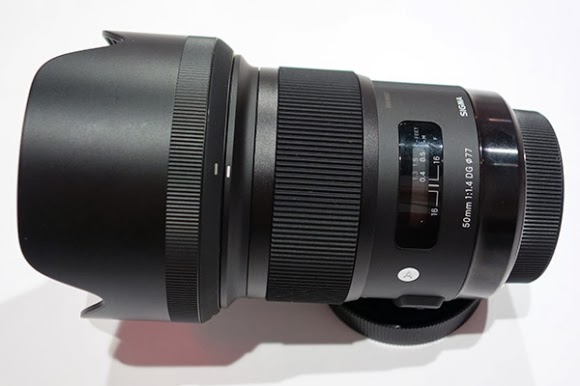
Sigma 50mm f/1.4 Art Lens Reviewed


SLRGear and others recently tested the Sigma 50mm f/1.4 Art lens and raved about the results, as compared to the Canon, Nikon and Zeiss (55mm) 50mm lenses. It is important to point out the Sigma lens has 2014 technology. The Canon EF 50mm f/1.2L and EF 50mm f/1.4 were introduced in 2006 and 1993. When comparing lenses, it has to be apples to apples.

Everyone knows in the last few years, many new improvements have been made in coatings and optics. I do not doubt the new Sigma 50mm f/1.4 Art lens is very good and an excellent value for the money. Canon is expected to introduce a new EF 50mm f/1.4 some time this year. Once the latest 50mm lens from Canon and Nikon are released, they will at least match or surpass the Sigma Art lens' performance. As for the $4,000 Zeiss Otus 55mm f/1.4 lens. Any average person can deduce it will not take a photo 4 times 'better' than a $1,000 lens and is therefore a bad value for the money. The Sigma 50mm lens is listed as $949 in the U.S. and shipping starts at the end of April. I may give it a test once it is available.

MichaelDanielHo.com

Below is an excerpt from the SLRGear test results :

"When we sat down with Sigma at this year's CES, we got some hands-on time with the lens. The build quality was exceptional, but what really got our attention was Sigma's off-handed remark that they weren't looking to surpass Nikon and Canon, but rather the $4,000 Zeiss Otus 55mm f/1.4 monster.

The Sigma 50mm f/1.4 Art is quite large and bulky with a total of 13 elements in 8 groups, including 1 aspherical and 3 super low dispersion elements. Other optical performance features include a 9-bladed rounded aperture for pleasing and smooth background blur and Sigma's latest Super Multi-Layer Coating to reduce lens flare and ghosting. Focusing should also be fast and quiet thanks to their Hyper Sonic Motor AF system.

50mm is a classic focal length for the full-frame shooter, and after Sigma's astounding 18-35mm f/1.8 Art DC lens, it wouldn't be an exaggeration to say this is one of the most anticipated products of the year. The competition from Canon and Nikon includes garden-variety 50/1.4s on the low end, with Nikon offering the slightly longer 58mm f/1.4 Nikkor on the high end, and Canon the f/1.2 L.

The Sigma 50mm f/1.4 Art lens ships with front and rear caps, a bayonet-mounted lens hood and a sturdy soft case, and is set to be available in Canon, Nikon, Sony Alpha and Sigma mounts.

So how does the Sigma stack up? In a word, or three: very, very well. Read on to find out more...

Sharpness 

Since Sigma apparently developed this lens to compete with the incredibly sharp Zeiss Otus (a $4,000 55/1.4 optic), we've been expecting it to be pretty sharp. Interestingly, though, Sigma president Kazuto Yamaki told IR/SLRgear founder Dave Etchells that they actually traded off just a little sharpness, in order to achieve better local contrast.

While we haven't had a chance to test it against the Zeiss Otus yet (we'll update this if/when we do), comparing the Sigma 50mm f/1.4 Art lens against high-end competition from Canon, Nikon, and Sony, it certainly seems like Sigma succeeded in their goals. The lenses we're comparing with here are the Nikon 58mm f/1.4G AF-S Nikkor, the Canon 50mm f/1.2L USM, and the Sony FE 55mm f/1.8 ZA Carl Zeiss Sonnar T*.

The Sigma 50/1.4 Art's sharpness holds up very well against this competition. At f/1.4 and on a full-frame camera, it pretty well blows all of the others out of the water. The Canon 50/1.2L is pretty sharp in the center, but the corners are extremely soft. The Nikon 58/1.4 is less sharp in the center, and quite soft in other parts of the frame. The Sony 55/1.8 obviously doesn't get to f/1.4 at all, so there's nothing to discuss on that front.

The other lenses all improve at f/2, but so does the Sigma 50, easily bettering all the others, at every point across the frame. At f/2.8, the Sigma's blur characteristic is almost perfectly flat, and quite sharp everywhere. The Nikon 58/1.4 is quite sharp in the center, but still with softer corners, albeit not quite as bad. The Canon 50/1.2 is also quite sharp at the center, with a little corner softness, and the Sony 55/1.8 is fairly flat, but still a bit softer on the left and right sides. At smaller apertures, the Sigma stays very flat and very sharp, with just a hint of diffraction limiting creeping in at f/8, as is the case with the other three lenses as well. The Nikon 58/1.4 never really flattens out, all the way to f/16, while the Sony and Canon optics are both quite flat by f/8.

Sub-frame sharpness results are about what you'd expect, just crops of what we saw in the full-frame bodies. The Nikon improves more than the others, since its sharpness a ways out from the center is so much worse than areas near the center that a lot of the worst wide-open blur behavior just doesn't appear within the sub-frame sensor area.

(Ed. Note: Given the extent to which we expect people will be squinting over these results, it's worth noting here again that differences in sharpness associated with a single color level change really aren't discernible visually, no matter how much you might care to pixel-peep real-world images. So please, no angels-on-the-head-of-a-pin arguments over one lens or the other being one shade of pink/purple than the other here :-)

Chromatic Aberration 

CA is quite well controlled in the Sigma 50mm f/1.4 Art lens, with a very low average value at f/1.4 on a full-frame body, increasing gradually to a still-low value at f/2.8 and remaining constant as you stop down further. The maximum CA is a bit higher at f/1.4 and f/2, decreasing to about f/4. This difference between maximum and average CA means that the Sigma's CA is confined to a small portion of the frame, mainly in the corners. If there were any weak point in the Sigma's performance compared to the competition, it would probably be CA, as both the Nikon and Sony beat it on that score. The Canon 50/1.2 is higher in both maximum and average measures, though. On sub-frame bodies, the results are somewhat similar, although the Sigma's maximum value is lower wide open, and both max and average values are a little higher at f/2.8 and above. The Canon 50/1.2 shows considerably worse maximum CA on an APS-C frame. (It's quite common for lenses to show worse CA on smaller-frame bodies, since the CA is measured relative to frame height, and a given displacement between the colors will correspond to a larger percentage of the smaller frame size.)

Shading (''Vignetting'') 

Shading is very common on large-aperture lenses when shot wide open, so it's not surprising to see a fair bit of it in the Sigma 50/1.4 Art. That said, though, it handily beats both the Canon and Sony competitors in this area, and the Nikkor only just edges it at f/1.4. The Sigma easily beats even the Nikon by f/2, although interestingly, the Nikon shows less shading at f/2.8 and higher than any of the other models we're discussing here. That said, though, light falloff with the Sigma is less than a quarter of a stop at f/2.8 and higher on a full-frame body. On an APS-C body, the Sigma's maximum shading is just over a quarter of a stop, and less than a tenth of a stop at f/2 and above.

Distortion 

The Sigma 50mm f/1.4 Art lens easily carries the day here, with almost immeasurable geometric distortion. (Average distortion is pretty much dead-zero, max distortion shows the tiniest hint of pincushion.) On a full-frame body, the other three lenses all show some degree of barrel distortion, the Nikkor the most, at about 0.5% max and 0.2% average, the Canon next at perhaps 0.4% and 0.2% respectively. The Sony does the best of the other three, with maybe 0.2% max and under 0.1% average. On sub-frame bodies, the Sigma's distortion is also near zero (no surprise), and distortion of the Canon and Nikon are both reduced, but the other Sony's characteristics change a little. This is often the case with highly-corrected lenses like these, in that the distortion doesn't just rise continuously as you move out from the center. For instance, if you look closely, you might find a little barrel in the center, some pincushion a bit out from there, and barrel again in the corners - or some other combination, depending on the lens in question. In the case of the Sony 55/1.8, the maximum distortion is a slight pincushion effect, while the average is a slight barrel effect. Both are under 0.1%, though, so could be considered negligible. By any measure, though, and regardless of frame size, the Sigma 50mm f/1.4 Art's distortion performance is just phenomenal.

Focusing Operation 

The Sigma 50mm f/1.4 Art lens focuses quickly -- and practically silently -- thanks to its Hyper Sonic Motor electrical AF system. However, it doesn't feel like the fastest AF in the world when racking all the way from minimum to infinity focus, which takes around one second, or perhaps a hair longer. Focusing in everyday scenarios with subjects in the intermediate focus distances felt very fast and accurate, though, and at times nearly instantaneous.

Of course, there's manual focusing as well, plus full-time manual focus override when using autofocus. The focus ring rotates very smoothly with enough resistance to prevent accidental adjustments but easy enough to adjust with a thumb and forefinger. The ring has soft stops at both minimum and infinity focus distances and provides a little over 90 degrees of rotation.

Macro 

This lens isn't specifically built for macro shooting with a maximum magnification ratio of 0.18x (1:5.6) and a minimum close-focusing distance of around 40cm (1.3 ft.). Therefore it's not great for true macro shooting, but can still focus relatively close, making it great for up close portraits, products shots, etc.

Build Quality and Handling 

A lightweight "nifty fifty" this lens is not! The Sigma 50mm f/1.4 DG HSM "A" is a serious lens, with serious weight and build quality. Like the other Global Vision lenses before it, the new Sigma 50mm f/1.4 Art lens is very well built, making use of their Thermally Stable Composite material, that despite technically being a form of polycarbonate plastic, looks and feels more like metal (and shares similar thermal properties to aluminum, as well). The barrel design is finished in a smooth matte black texture, with a nice, thinly-ridged texture along the underside for some grip. The large 1.5-inch-wide focus ring has a similar ridged texture embossed into the thick, rubberized grip. If you've used any other Sigma Global Vision lenses, such as the 24-105mm f/4 or 35mm f/1.4, you'll be familiar and undoubtedly impressed with the design and build quality of this lens.

Other optical performance features include a 9-bladed rounded aperture for pleasing and smooth background blur and Sigma's Super Multi-Layer Coating to reduce lens flare and ghosting.

Being a prime lens, the lens is a pretty straightforward affair in terms of bells and whistles. A focus distance window complete with a distance scale and depth of field markings sits on top of the lens. There's also a MF/AF switch on the left side, which has a nice, solid feel to it -- no risk of accidentally toggling focus modes. The reversible polycarbonate lens hood feels very solid with a rubberized bayonet mount that snaps in place with satisfying click -- no issues with wiggle or play.

We mentioned "serious weight" and we're not kidding. This lens is large and bulky, with a total of 13 elements in 8 groups, including 1 aspherical and 3 super low dispersion elements, all inside a large diameter barrel that accepts 77mm filters. Unlike similar lenses from other manufacturers, such as the Nikon 58mm f/1.8G or Canon 50mm f/1.2, the Sigma 50mm f/1.4 Art is both longer and heavier, at just shy of four inches long and around 810g (28.6 oz.) in weight. On the other hand, unlike its intended competitor, the Zeiss Otus 55mm f/1.4, the Sigma is noticeably smaller and lighter. Nevertheless, this lens is definitely not a lightweight, go-anywhere lens like the typical 50mm f/1.4 lens.

Our full-frame test camera for Canon lenses is the 1Ds Mark III, which is far from a lightweight camera on its own. With the Sigma 50mm lens mounted to that camera, it's a heavy combo. Even on our smaller Canon 7D body, it makes for a pretty hefty pairing. However, if you're used to using large lenses and larger cameras, the weight and bulk of this lens is not overbearing or awkward. It actually feels more akin to using something like a 24-70mm f/2.8 lens (in fact, this Sigma 50mm is almost the same weight as the Canon EF 24-70mm f/2.8L II USM) and is nicely balanced on both the large, full-sized DSLRs as well as medium-sized ones.

Alternatives

On the Nikon side, you have basically three options :

The affordable 50mm models in f/1.4 and f/1.8 versions, available for around $450 and $220, respectively. That's a significant savings on the likely price of the Sigma. The image quality of these models, while far inferior to Sigma's triumph, aren't terrible, at least she stopped down - but stopped down isn't what the Sigma is all about.

The slightly longer 58mm f/1.4 Nikkor available for $1,700 Even though Nikon pushed the focal length on this one, results are only marginally improved from the $450 50mm f/1.4 mentioned above. We really can't recommend this lens over Sigma's 50mm f/1.4 Art.

On the Canon side, your options are similar :

Like Nikon, Canon offers lower-cost 50mm options in f/1.4 and f/1.8 variants, for about $400 and $100, respectively. These lenses will struggle wide open, but perform well when stopped down, though you'll again need to get to f/2.8 and f/4.0 before things become tack sharp.

On the high end, Canon offers a direct focal length-competitor in the $1,700 50mm f/1.2 L. While you gain a half-stop advantage, this lens is quite soft in the corners, even at f/1.4. Light falloff and CA are both factors that also put it solidly behind the Sigma. Here too, the advice is easy: buy the Sigma 50mm Art.

Carl Zeiss offers the $4,000 55mm f/1.4 Otus. This lens is a sharpness monster and, while we've yet to review it (coming soon), we're hard pressed to find a strong reason to recommend it, given Sigma's stellar performance for a (likely) price less than half that of the Otus.

Conclusion 

The Sigma 50mm f/1.4 Art is the most exciting lens we're likely to review this year. All competing lenses from Canon and Nikon fell short when compared to the resolving power of the 50mm Art. We haven't (yet) tested the very best from Zeiss, but we are confident Sigma will trounce it in one key area: price. This difference is likely to be a yawning chasm. Our expectation for pricing on this lens is for something at least a bit less than Canon's 50mm f/1.2 L, which goes for $1,700; despite a variety of rumors and no official price for the Sigma yet, we're expecting it'll be less than that.

Even if the price is 'merely' even with the best of Canon and Nikon, this lens is easy to recommend. Put simply: it trounces any similar model available for less than $4,000. If it comes in significantly cheaper than the best of Canon and Nikon, Sigma will have made a friend of every full-frame shooter in the land."

Tuesday, April 1, 2014

Sigma To Acquire Samyang Optics


Ronkonkoma, NY, April 1, 2014 – Today, Sigma Corporation is pleased to announce the acquisition of Korean-based Samyang Optics Company Limited. Known for its high quality manual lenses, Samyang offers expertise in production efficiencies and brand management that will greatly benefit the world's largest family-operated lens manufacturer.

"We are very proud to integrate Samyang into our organization. This is a symbiotic relationship that will pay excellent dividends to the photographic community," says Machyzo Yamakiro, Excecutive Vice President of Sigma Corporation.

All of Samyang's manual-only lenses will represent a new Global Vision line at Sigma – "Classic" – which will join the already popular and well-respected Art, Contemporary and Sports lines. Hallmarks of Sigma's new Classic lenses will be simplicity, superb performance and affordability.

"While the Samyang/Rokinon/Bower/Walimex/Pro-Optic/Opteka names will not live on, their spirited defiance of modern technology will continue in our 'Classic' vision for budget-minded photographers," says Yamakiro.

Distribution of Sigma's Classic lenses will begin in May 2014. MichaelDanielHo.com

Monday, March 24, 2014

Sigma 50mm f/1.4 Art Lens Pricing Coming


Sigma 50mm f/1.4 lens

I have just returned from my photo shoot in India. Trying to catch up on the last few weeks' photography news. Will be posting my photos and reflection on the trip soon on my Blog and website MichaelDanielHo.com


* * * There is a preliminary review on the Sigma 50mm f/1.4 Art lens here * * *


Sigma is planning to announce the list price of their highly anticipated 50mm f/1.4 Art lens some time in April, 2014. They boast the new glass will have image quality equaling the Zeiss Otus 55mm f/1.4 lens, currently the champion of the 50mm lens lineup, with a list price of $4,000.

The list price of the Sigma lens is expected to be about $1,000. Only time will tell how much is hype and how much is reality although I can tell you immediately a $4,000 lens does not take a photo 4 times better than a $1,000 lens. The new Sigma lens will be a very good value if it delivers an almost equal IQ than the Zeiss. Canon is expected to announce a new 50mm f/1.4 lens some time this year as well.

Friday, February 21, 2014

Sigma 50mm f/1.4 DG HSM Lens Coming Soon?


The above video was shot at the recent CP+ Show in Yokohama, Japan. Sigma has been on a roll lately. They even boast their upcoming 50mm f/1.4 DS HSM Art lens may equal the performance of the Zeiss Otus 55mm f/1.4

Third party lens makers are getting to be quite good and Sigma’s recent releases have garnered very good reviews. The Sigma 18-35mm f/1.8 Art and 35mm f/1.4 DG HSM are prime examples of their recent success. Little is known about the upcoming 50mm lens except it will be lighter than the Zeiss 50mm, perhaps in the neighborhood of about 800g  / 28 oz. The suggested retail price for the Sigma 50mm f/1.4 Art lens may be well over $1,000.

MichaelDanielHo.com

Tuesday, February 4, 2014

Sigma Releases Geometric and Diffraction MTF charts for Lenses


Sigma 200-500mm f/2.8 APO EX DG Lens

RONKONKOMA, N.Y., — February 3, 2014 – Sigma Corporation of America, a leading researcher, developer, manufacturer and service provider of some of the world’s most impressive lines of lenses, cameras and flashes, today announced that the company will now release a Geometrical MTF (Modulation Transfer Function) chart in addition to a Diffraction MTF chart when measuring the performance of all new Global Vision lenses.

MTF charts are important because they help photographers better understand the optical quality of lenses. Sigma has traditionally released Diffraction MTF data because it takes the diffraction quality of light into consideration, which can dramatically affect the data outcome. Diffracted light exists at every aperture, giving photographers a more accurate measurement of how the lens will perform in real life. Although Geometric MTF data is easier to measure and calculate since it does not consider the diffraction quality of light, it tends to show higher values in the graph and less defined results.

“As a family-owned organization, we hold ourselves and the products we design to a very high standard,” said Mark Amir-Hamzeh, president of Sigma Corporation of America. “Our customer’s expect high quality products and by sharing both MTF charts for all our new lenses, we are able to help guide them in making the most informed purchase decisions based on how our lenses will perform in actual photography situations.”

As a leader in technology and innovation, Sigma Corporation is committed to showing the true value and quality standards of all Sigma Global Vision lenses. Every lens is tested with Sigma’s proprietary modulation transfer function (MTF) “A1” measuring system before being shipped from the factory in Japan. By making both MTF charts available, Sigma is providing its customers with accurate measurements of its lenses and giving photographers a chance to see the full potential of Sigma’s lenses.

MichaelDanielHo.com

Wednesday, January 15, 2014

Sigma 50mm f/1.4 Art Lens Aiming High


Sigma has been on a roll lately with some highly acclaimed glass introduced last year and two new global lens announced at CES 2014. One of the lens mentioned is the 50mm f/1.4 Art. However, they have brought bravo to a new height by suggesting this new lens' performance will come close to the Zeiss Otus 55mm f/1.4 lens, a fast and razor sharp prime costing $4,000 and is aimed at the fashion and advertising market.

The new Sigma 50mm f/1.4 Art lens has many more glass added, including 13 elements in 8 groups compared to 8 elements in 6 groups of the current model. The lens feels heavier and solid but will be priced significantly lower than the Zeiss, or even the high end Canon, Nikon and Sony competing models.

MichaelDanielHo.com

Wednesday, January 8, 2014

Sigma 24-105mm f/4 DG OS HSM Lens Review


.


Sigma has been on a roll in the last couple of years. They have just announced two new Global Vision lenses at the CES 2014. One of their most recent release is the 24-105mm f/4 DG OS HSM. This lens is newer than the venerable Canon EF 24-105mm f/4L IS USM, one of the favorite lenses in my equipment bag. The Sigma 24-105mm f/4 is the lens DxOMark said is the new reference standard for professionals. The Phoblographer recently reviewed the lens and the following is an excerpt from their article :

"The Sigma 24-105mm f/4 is extremely well-built. It almost feels like a Zeiss lens. Autofocus is extremely quick throughout the entire range of the lens and image stabilization on this lens work wonders. Not to forget that the image quality of this lens is fantastic and that the lens is absolutely sharp. In the conclusion, the reviewer writes :

If I could only have one lens with me, this would be it. This lens.The Sigma 24-105mm f4. I emerged from testing this lens thinking this just may be the most well-rounded, practical lens I have ever used. It’s not about glitz or glamour. The Sigma 24-105mm f4 is about getting the shot.  This lens is really good. It is civilized and can be put to work everywhere. Sigma put a lot of thought into this lens and it’s appreciated."

Well, I agree with the reviewer that the 24-105mm focal length is a great, well-rounded lens to have on a full frame DSLR but I am not convinced enough to ditch my Canon and rush out to buy the Sigma. Canon introduced the EF 24-105mm f/4L IS in 2005. Although in the subsequent years, there has been coatings and optics advancement, the perceptible difference in marginal improvement is very small, in my opinion. However, an additional one or two stop of IS improvements on the Canon would be greatly appreciated. I have owned the Canon EF 24-105mm f/4L IS for years and am very happy with it. You can see Travel and Wildlife photos taken with the lens worldwide on my website MichaelDanielHo.com

Friday, October 25, 2013

Sigma 24-105mm f/4 DG OS Lens Available For Pre-Order


Sigma Announces the 24-105mm f/4 DG OS Lens 

The new lens is priced at $899 and available for pre-order from your camera store. Access the full power of your camera’s image sensor. This new zoom fulfills Sigma’s uncompromising pursuit of high resolution.

The image sensors of digital SLR cameras continue to offer higher and higher resolution, and photographers are looking for high-performance lenses that leverage these sensors’ full power. In the case of zoom lenses as well, which are a dependable go-to in a wide variety of photographic conditions, photographers want convenience combined with exceptional optical performance. The new SIGMA 24-105mm f/4 DG OS HSM zoom lens more than fulfills these requirements, offering exceptionally stable high resolution from wide-angle to medium telephoto photography.

While featuring a large-aperture 82mm filter size, this lens minimizes optical aberrations and avoids reduced peripheral brightness, an issue that tends to affect lenses with similar specifications. Each lens is checked with Sigma’s proprietary A1 MTF (modulation transfer function) measuring system to ensure it offers exceptional quality for the high-megapixel era. Try this new high-performance zoom for yourself, and experience Sigma’s uncompromising pursuit of high resolution.

The full realization of the Art product concept for you to hold in your own hands and appreciate with your own eyes.

Designed with a focus on sophisticated optical performance and tremendous expressive power, our new Art line of lenses delivers top-level image quality. With unsurpassed expressive performance, these lenses reach the high standards demanded by photographers with an artistic, creative inclination. Along with landscapes, portraits, still-life, close-up and casual snaps, they’re perfect for the kind of photography that unleashes the inner artist. Ideal for studio photography, they offer just as much expressive scope when capturing architecture, starry skies, underwater shots and many other scenes. Hold it in your own hands and appreciate it with your own eyes.


MichaelDanielHo.com

Monday, October 21, 2013

Sigma Brings Safari Experience to PhotoPlus Expo 2013


RONKONKOMA, N.Y., Oct. 21, 2013 – Sigma Corporation of America, a leading researcher, developer, manufacturer and service provider of some of the world's most impressive lines of lenses, cameras and flashes, will kick off the Sigma Safari Experience on Thursday, October 24, the first day of PhotoPlus Expo (PPE) at the Javits Convention Center in New York City.

Visitors of Sigma’s PPE booth 537 this week will have an opportunity to test Sigma’s cameras and lenses as they photograph professional models who have been dramatically transformed with high-end makeup and styling to resemble safari animals. Sigma Pros Jennifer Rozenbaum, Kevin Ames and Lindsay Adler will be on hand to interact with shooters and teach live sessions from the Sigma Safari Experience area at 11 a.m., 1 p.m. and 3 p.m. ET each day of the show, Oct. 24, 25 and 26. These sessions cover lighting, posing and exposure, and will be live streamed to the Sigma website at http://www.sigmaphoto.com/sigma-safari-experience.

In addition to the hands-on testing and live tutorials, Sigma will offer show attendees and home viewers a chance to win several prizes through the event.

“This is our second year of offering a hands-on shooting experience in our booth and we are pleased to say that the models and level of engagement will be even better this year. Our Sigma Pros are eager to share their expertise and we’re really excited to be able to share the experience with audiences at the show and at home,” said Mark Amir-Hamzeh, president of Sigma Corporation of America.

Here are the schedules of the live streaming SigmaSafari tutorials :

Thursday, Oct. 24

11a.m. ET – Kevin Ames: “Long Lens – Close up!”
1 p.m. ET – Lindsay Adler: “Lighting for Mood”
3 p.m. ET – Jennifer Rozenbaum: “Posing to Flatter Every Woman”

Friday, Oct. 25

11 a.m. ET – Jennifer Rozenbaum: “Posing vs. Editing”
1 p.m. ET – Kevin Ames: “Making Bokeh”
3 p.m. ET – Lindsay Adler: “The One-Two Punch”

Saturday, Oct. 26

11 a.m. ET – Lindsay Adler: “Analyze to Get the Shot!”
1 p.m. ET – Jennifer Rozenbaum: “Posing Flow”
3 p.m. ET – Kevin Ames: “Exposing Exposure”
Win prizes at Sigma’s booth (or online) each day of the show:

SigmaSafari Sweeps : Two lucky Sigma fans – one at the show and one at home – will win a 35mm F1.4 DG HSM Art lens each day of the show! Fans can enter for a chance to win by testing gear at the Sigma Safari Experience shooting station in the Sigma booth and by registering their email address online, during the live broadcasts.

Sigma will have more than 45 products on display at PPE this year. Stop by the booth to see the latest lenses from the Global Vision line, including the recently announced 24-105mm F4 DG OS HSM and the 18-35mm F1.8 DC HSM | ART lenses. Sigma’s new USB Dock will also be available at the booth. To find out more about Sigma’s Safari Experience, please visit www.sigmaphoto.com/sigma-safari-experience.

MichaelDanielHo.com

Monday, October 14, 2013

Sigma Announces 24-105mm f/4 DG OS Lens


Sigma Announces  24-105mm f/4 DG OS Lens 

Access the full power of your camera’s image sensor. This new zoom fulfills Sigma’s uncompromising pursuit of high resolution.

The image sensors of digital SLR cameras continue to offer higher and higher resolution, and photographers are looking for high-performance lenses that leverage these sensors’ full power. In the case of zoom lenses as well, which are a dependable go-to in a wide variety of photographic conditions, photographers want convenience combined with exceptional optical performance. The new SIGMA 24-105mm f/4 DG OS HSM zoom lens more than fulfills these requirements, offering exceptionally stable high resolution from wide-angle to medium telephoto photography.

While featuring a large-aperture 82mm filter size, this lens minimizes optical aberrations and avoids reduced peripheral brightness, an issue that tends to affect lenses with similar specifications. Each lens is checked with Sigma’s proprietary A1 MTF (modulation transfer function) measuring system to ensure it offers exceptional quality for the high-megapixel era. Try this new high-performance zoom for yourself, and experience Sigma’s uncompromising pursuit of high resolution.

The full realization of the Art product concept for you to hold in your own hands and appreciate with your own eyes.

Designed with a focus on sophisticated optical performance and tremendous expressive power, our new Art line of lenses delivers top-level image quality. With unsurpassed expressive performance, these lenses reach the high standards demanded by photographers with an artistic, creative inclination. Along with landscapes, portraits, still-life, close-up and casual snaps, they’re perfect for the kind of photography that unleashes the inner artist. Ideal for studio photography, they offer just as much expressive scope when capturing architecture, starry skies, underwater shots and many other scenes. Hold it in your own hands and appreciate it with your own eyes.


MichaelDanielHo.com

Sunday, October 13, 2013

Sigma 24-105mm f/4 DG OS Lens Coming


Sigma has been on a roll lately. Their recently introduced lens, like the 35mm f/1.4 DG HSM lens and Mount Conversion Service have received favorable comments and reviews. Now word is they are ready to make a splash at the Photokina Show in 2014 with more lens announcement and may introduce the 24mm f/1.4 DG HSM lens some time late this year but most probably next year before the Show.

In addition, it seems Sigma is ready to introduce a 24-105mm f/4 DG OS lens before the end of 2013. It will have the 82mm filter, 19 elements in 14 groups and weighs about 885 grams. This will put the new lens quite a bit heavier than the Canon EF 24-105mm f/4L IS, one of my favorite walk around lenses in the EF lens lineup. Sadly, the lens is showing its age and Canon should come out with the Series II replacement soon or Sigma will take sales away from them.

MichaelDanielHo.com

Wednesday, September 18, 2013

Sigma to Update Optimization Pro and HSM Firmware


From Sigma Corporation :

Thank you for purchasing and using our products. We would like to announce that we are going to introduce SIGMA Optimization Pro Ver. 1.1, an update to the dedicated software for the SIGMA USB DOCK, in the end of September.

Even after the update of lens firmware, this updated version of software will allow customers to secure all the settings and adjustment values of AF and OS that are customized via the USB DOCK.

As SIGMA USB DOCK users, please be sure to update to SIGMA Optimization Pro Ver1.1 from the following page, before operating any lens firmware updates.

http://www.sigma-global.com/download

Moreover, as the new version of SIGMA Optimization Pro becomes available, we are planning to update lens firmware for 35mm F1.4 DG HSM A012 for Canon mount as well as 17-70mm F2.8-4 DC MACRO OS HSM C013 for Sigma, Canon and Nikon mounts. We appreciate your continuing support for our company and products.

MichaelDanielHo.com